ETF model portfolios designed for real investor needs. Discover →



XOEX: A Low-Cost Core U.S. Equity ETF for Active Stock Pickers
Traditional beta ETFs could amplify mega-cap risk. Learn how alternative ETF structures offer cleaner market exposure.


Keep up with what matters in ETFs
Get timely ETF insights, market trends, and top ideas straight to your inbox.
Your newsletter subscriptions with us are subject to ETF Central's Privacy Policy and Terms and Conditions.
Even in high-conviction portfolios, some level of market beta could still be useful. A beta sleeve could help stabilize returns, reduce reliance on individual security outcomes, and keep the portfolio anchored to overall market performance. The issue is less about whether beta belongs in the portfolio and more about how that beta is delivered.
Market cap weighting can concentrate risk when a small number of stocks grow to dominate index weights. For active stock pickers, this could create a challenge. Adding a traditional market cap weighted index ETF as a beta sleeve can unintentionally overload the portfolio with exposure to the same mega-cap names the investor may already own or deliberately avoid.
Several alternatives have emerged to address concentration concerns. Fundamental weighting reallocates exposure based on measures such as earnings, free cash flow or dividends. Equal weighting resets allocations so that each stock receives the same weight at each rebalance, regardless of size.
Both approaches could reduce concentration, but they could also introduce higher turnover, greater fees, and potential tracking error versus traditional benchmarks.
A less discussed approach takes a simpler path. Instead of reweighting the entire index, it starts with a well-known benchmark and systematically excludes the largest stocks. This does not aim to remove future winners, but rather to limit exposure to companies that already occupy the top of the hierarchy.
For active stock pickers, this can be appealing for two reasons. It reduces single-stock concentration at the top of the index, and it can soften sector dominance that often accompanies mega-cap leadership, particularly in technology-heavy periods.
As a result, this type of structure can function as a cleaner beta allocation for investors who want broad equity exposure without overwhelming their active views.
Like what you're reading?
Stay in the loop — get the latest ETF insights: trends, analysis, and expert picks.
Mega-Cap and Tech Sector Dominance
It helps to start with the benchmarks. The S&P 500 is a market-cap-weighted index of 500 U.S. companies selected using a combination of rules and committee discretion. Constituents are screened for size, liquidity, and earnings consistency, with some subjectivity around additions and removals.
The S&P 100 follows the same philosophy but in a far more concentrated form. It holds roughly one-fifth the number of stocks, focused on the largest segment of the U.S. equity market, and it is also market-cap weighted. As a result, there is substantial overlap between the two indexes.
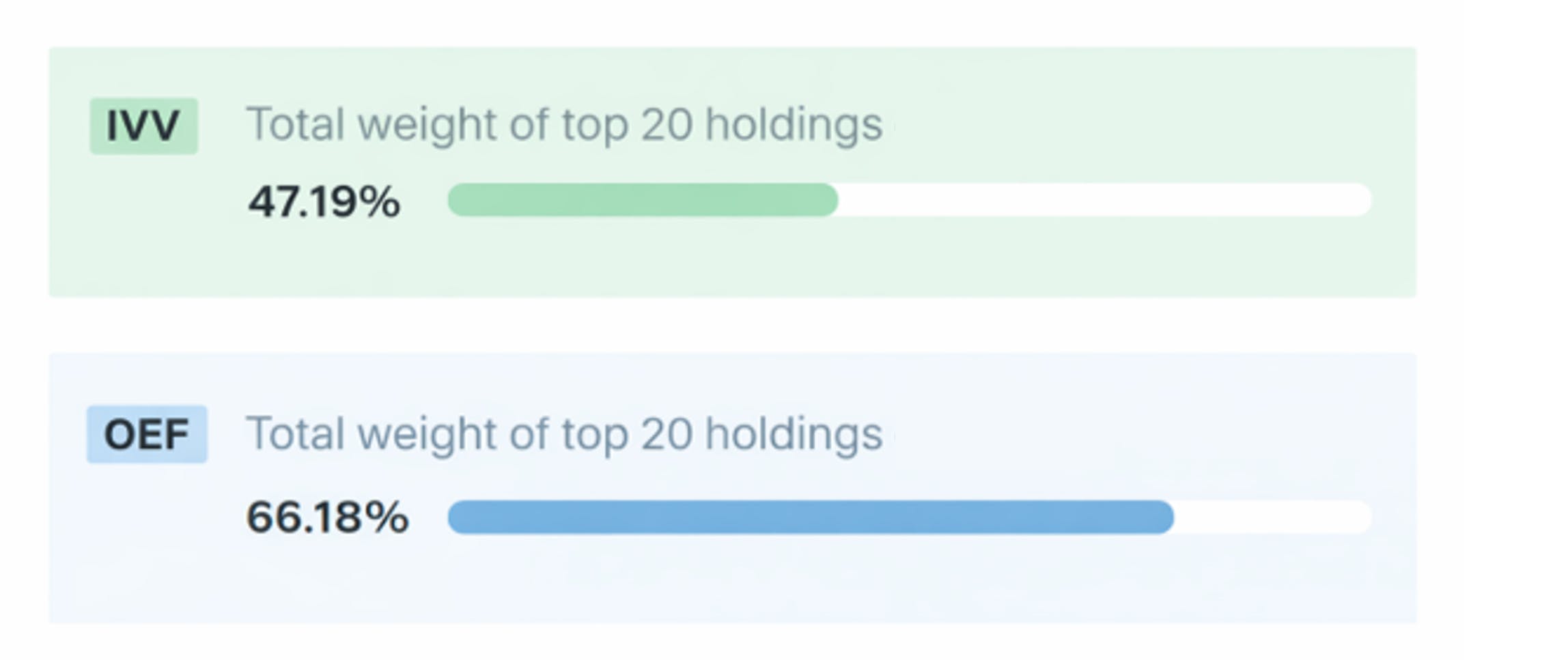
Source: IVV & OEF holdings as of January 22, 2026
Sector exposure compounds this effect. Information Technology represents 36.16% of the S&P 500 ETF and 42.65% of the S&P 100 ETF.

Source: ETF Central, 2026
In practice, this means portfolio risk and returns are driven by a small group of mega-cap stocks, most of which sit in the same sector.
For stock pickers, that can be counterproductive. A traditional cap-weighted core allocation may load the portfolio with exposure to the same large technology names an investor already owns, or is deliberately trying to avoid, even before any active positions are added.
How XOEX Addresses Concentration Risk
Rather than reweighting an index using equal weighting or fundamental metrics, a simpler approach is to identify the stocks that dominate a benchmark and systematically exclude them. That is the approach used by the Xtrackers S&P 100 Ex Top 20 ETF
XOEX starts with the S&P 100 and removes the 20 largest stocks by market capitalization at each reconstitution. The process is rules-based and does not rely on forecasts or factor tilts. The ETF charges a 0.15% expense ratio, which is lower than the 0.20% charged by a comparable market-cap-weighted S&P 100 ETF from iShares.
The result is meaningfully lower concentration. As of January 22, the top 20 holdings in XOEX account for 43.63% of the portfolio. As noted earlier, in a standard market-cap-weighted S&P 100 ETF, the top 20 represent 66.18%. That is a reduction of 22.55% in top-end concentration.

Source: XOEX holdings as of January 22, 2026
Sector exposure also shifts. Information technology represents 27.67% of XOEX, compared with 42.65% in the traditional S&P 100 ETF. By removing the largest mega-cap stocks, many of which sit in the same sector, XOEX reduces both single-stock and sector dominance without abandoning a familiar benchmark.

Source: ETF Central, 2026
For investors who actively pick stocks, particularly in the mega-cap space, XOEX could serve as a core allocation that helps limit overlap with high-conviction positions, while still maintaining beta exposure.
Please note this article is for information purposes only and does not in any way constitute investment advice. It is essential that you seek advice from a registered financial professional prior to making any investment decision.
Segments
See all
Mentioned ETFs

Latest ETF News
See all ETF newsCould Water ETFs Be the Next AI Bottleneck Trade?

What is a Boomer Candy ETF?

ETF Comparison: NEOS Nasdaq-100 High Income ETF (QQQI) Versus Goldman Sachs Nasdaq-100 Premium Income ETF (GPIQ)





 Advantages of ETFs over Mutual Funds1/6
Lower Costs
In this guide, we'll explore the advantages of ETFs over mutual funds, giving you valuable insights into why ETFs have gained significant popularity among investors like yourself.
Leveraged ETFs: Unlocking the Potential for Amplified Returns1/6
Understanding Leveraged ETFs
Explore leveraged ETFs: potential for amplified returns & risks. 5 ETFs to consider across equities, commodities & fixed income.
What is a Leveraged ETF?1/6
Introducing Leveraged and Inverse ETFs
In this guide, we'll dive into the world of leveraged ETFs, exploring their definition, mechanics, potential risks, and rewards.
Recent educational content

ETF Trends
ETF Industry KPIs September 8, 2026
This week’s KPI data overview highlights key metrics and trends shaping the ETF landscape.

ETF Trends
ETF Industry KPIs August 31, 2026
This week’s KPI data overview highlights key metrics and trends shaping the ETF landscape.
ETF Trends
ETF Industry KPIs August 24, 2026
This week’s KPI data overview highlights key metrics and trends shaping the ETF landscape.
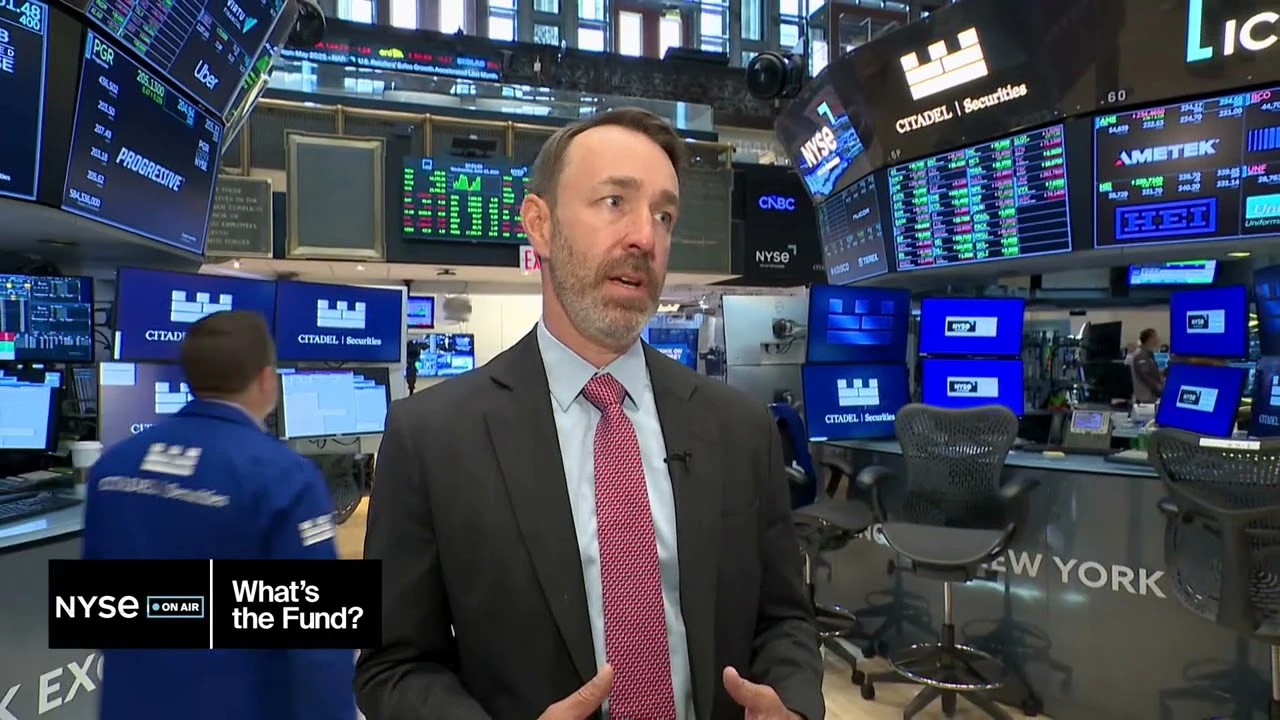
What’sTheFund
What's the Fund | Ocean Park Diversified Income ETF (DUKZ)
James St Aubin, Chief Investment Officer at Ocean Park Asset Management, discuss the DUKZ ETF, exposing investors to the whole spectrum of asset classes in the fixed income markets, through their rules-based process.

Browse all educational columns



Expert-Built ETF Portfolios, All in One Place
Don’t start from scratch. Discover ready-made ETF portfolios built by professionals to match different goals, timelines, and market views. Use them as inspiration or as a starting point for your own allocation.