Keep tabs on your favorite ETFs with a personalized weekly tracker. Create a Watchlist now →



A Historic Executive Order: What Federal Action on Psychedelics Means for the Mental Health Landscape
Federal policy has officially caught up with the science and the implications for the psychedelic healthcare sector are significant.

Keep up with what matters in ETFs
Get timely ETF insights, market trends, and top ideas straight to your inbox.
Your newsletter subscriptions with us are subject to ETF Central's Privacy Policy and Terms and Conditions.
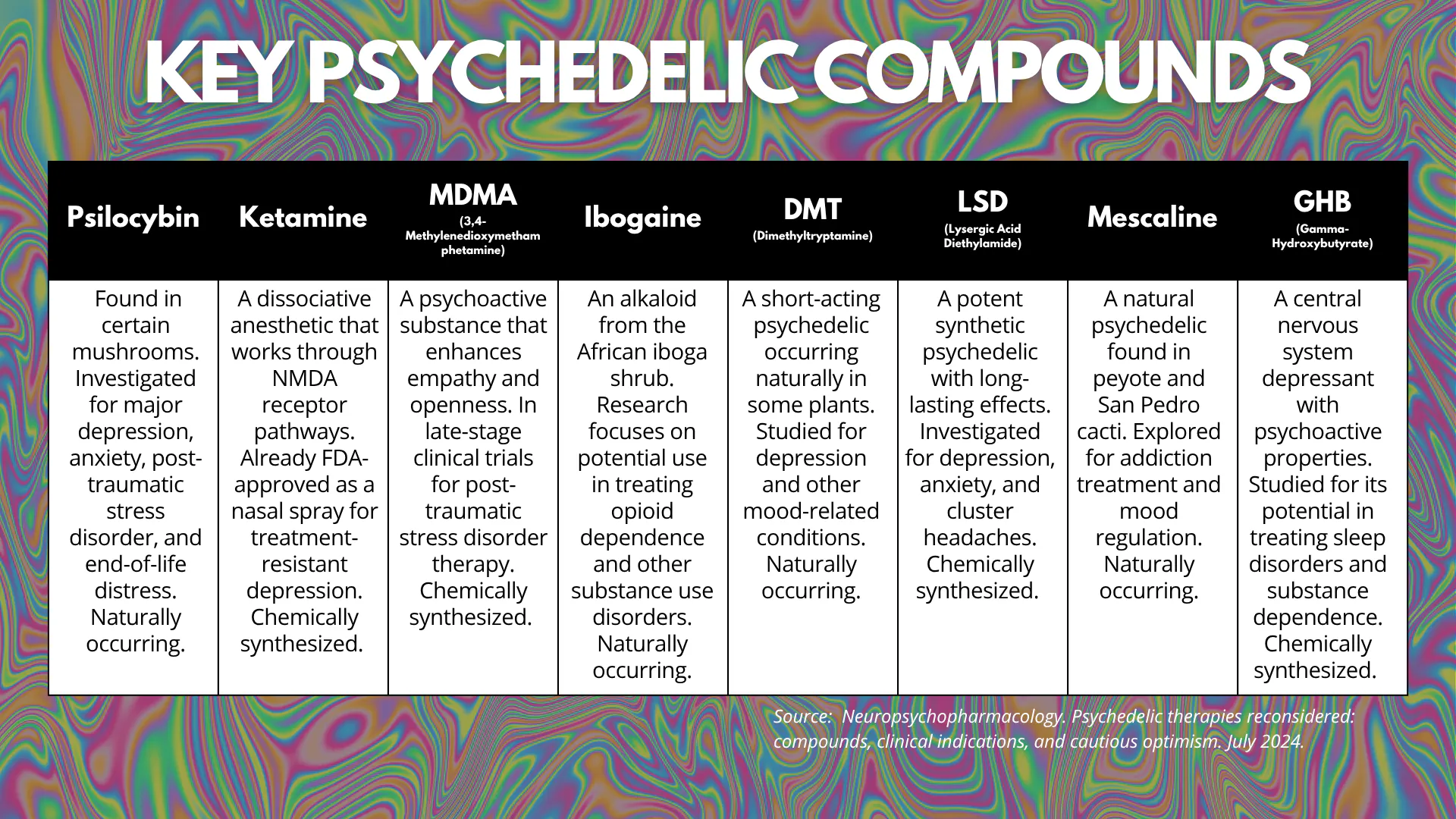
The order directs the FDA Commissioner to issue National Priority Review Vouchers to psychedelic compounds that have already received Breakthrough Therapy designations, creates a pathway under the Right to Try Act for eligible patients to access investigational psychedelic drugs, including ibogaine compounds (a naturally occurring alkaloid derived from the African iboga plant, studied for its ability to rapidly interrupt addiction cycles and reset neurological pathways involved in craving and withdrawal), and commits $50 million through the Advanced Research Projects for Health (ARPA-H) program to match state-level investments in psychedelic research.¹ It further directs the Attorney General to initiate rescheduling reviews upon completion of successful Phase 3 clinical trials.¹

Like what you're reading?
Stay in the loop — get the latest ETF insights: trends, analysis, and expert picks.
The Mental Health Crisis Driving This Action
To understand why this order carries such weight, it helps to understand the scale of the problem it is addressing.
Today, over 14 million American adults live with serious mental illness, defined as a diagnosable condition that substantially interferes with daily functioning.¹ Around 8 million are currently on prescription medication.¹ Standard pharmacological treatments for PTSD have seen no major FDA approvals in over two decades.²
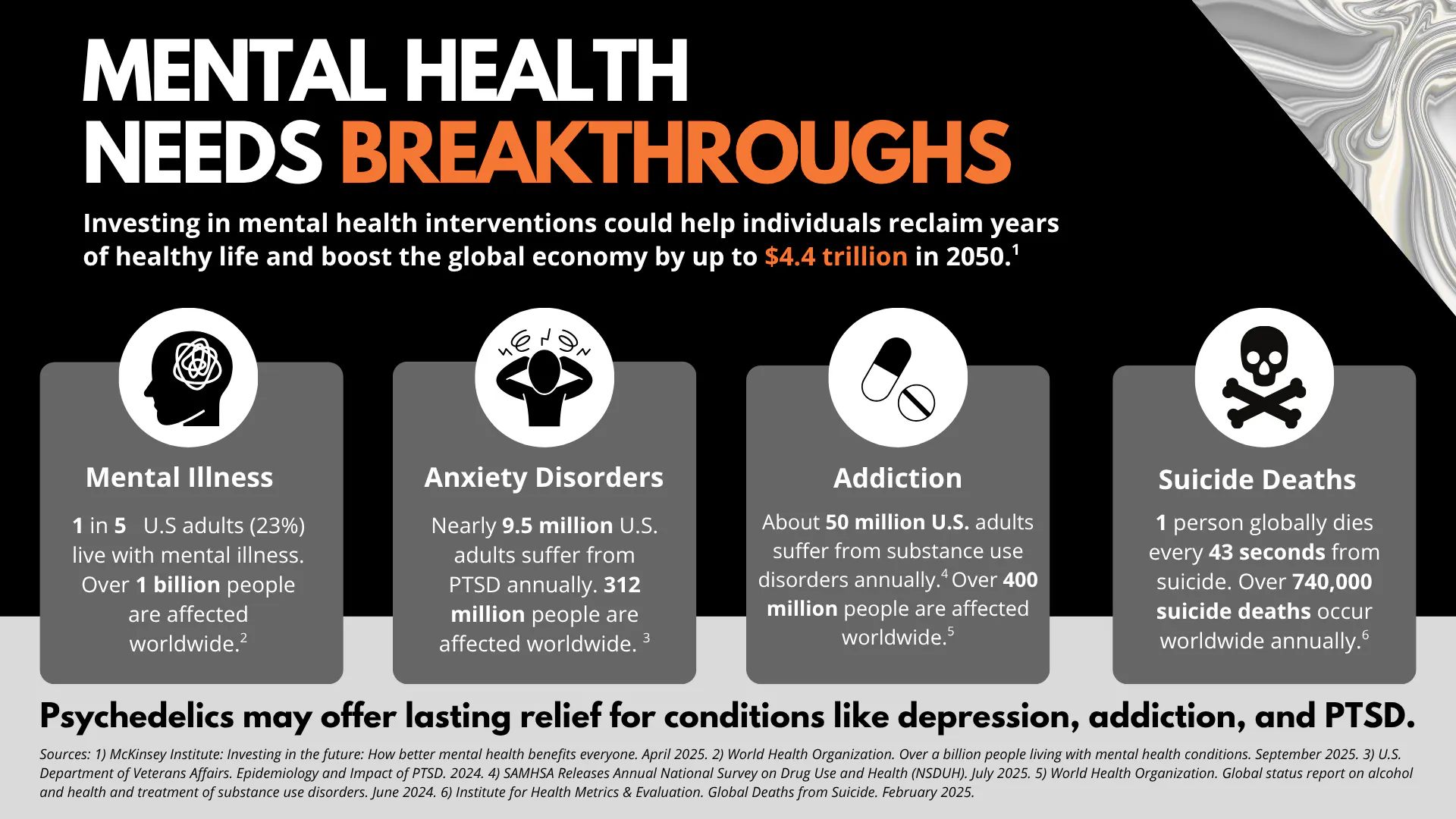
The crisis is especially widespread among the nation's veterans. With approximately 17 veterans dying by suicide every day, access to new, effective treatments has moved from a clinical preference to a moral imperative.² The Department of Veterans Affairs is now participating in at least five active clinical trials of psychedelic drugs across New York, California, and Oregon.³
In his remarks at the signing, President Trump underscored the urgency: "In many cases, these experimental treatments have shown life-changing potential for those suffering from severe mental illness and depression, including our cherished veterans."⁴
The Clinical Case for Psilocybin, Ibogaine, and Beyond
The FDA has already granted Breakthrough Therapy designation to specific psychedelic drugs, a category designed to expedite the development and review of treatments showing substantial improvement over existing standard-of-care therapies.⁴ These include formulations of psilocybin for treatment-resistant depression and an LSD formulation for generalized anxiety disorder, which received its Breakthrough designation in 2024.⁴
Small but significant clinical trials have demonstrated that one or two supervised doses of psilocybin can produce lasting changes in patients with treatment-resistant major depressive disorder, conditions that have historically not responded to traditional antidepressants.⁴ A 2025 study published in the Journal of the American Medical Association showed that a single dose of LSD could ease anxiety and depression for months.³
Ibogaine, the compound most prominently named in the Executive Order, has shown particular promise for the veteran community. Research published in Nature Medicine found ibogaine treatment produced significant reductions in PTSD severity and suicidal ideation in veterans, results that potentially outpace any existing standard of care.²
Beyond PTSD, ibogaine has drawn considerable scientific attention for its potential in treating substance use disorders, an area of enormous and largely unmet clinical need. Substance use disorders account for approximately 600,000 deaths globally each year, driven largely by opioid use, and existing treatments address only isolated aspects of the underlying neurobiology.⁶ Ibogaine's appeal lies in its multimodal mechanism: it interacts with multiple receptor systems simultaneously, including opioid, serotonin, NMDA, and sigma receptors, in a way that appears to recalibrate the brain's reward circuitry and dampen the compulsive craving patterns that drive relapse.⁶
Early observational data has shown it can rapidly reduce opioid withdrawal symptoms and cravings, sometimes after a single administration.⁷ Texas recognized this potential in June 2025, when Governor Greg Abbott signed legislation allocating $50 million toward clinical trials investigating ibogaine's use in opioid use disorder and co-occurring substance use disorders, one of the largest state-level commitments to psychedelic research in U.S. history.⁸ The federal matching funds in the Executive Order are partly seen as a direct response to that Texas initiative, creating a combined public investment that could meaningfully accelerate the path to FDA-sanctioned trials.¹ It is worth noting that ibogaine research has historically been conducted primarily outside the United States due to its Schedule I classification, and open questions remain around cardiac safety, areas that well-designed, federally supported clinical trials are specifically designed to address.⁷
FDA Commissioner Marty Makary signaled the agency is prepared to move decisively: "Drugs can get approved in weeks, not a year or a year-plus, if they are in line with our national priorities."⁴ The week following the signing, the FDA was expected to issue National Priority Vouchers to three psychedelic compounds.³
A "Halo Effect" for the Broader Sector?
One of the more consequential downstream implications of the Executive Order may extend beyond psychedelics themselves. The regulatory roadmap being built for psychedelics could provide a template relevant to other plant-based medicine sectors, including medicinal cannabis.²
The administration's formal acknowledgment of the medical use of these substances keeps pressure building on broader policy normalization, including the removal of the 280E tax burden (a federal tax law that prohibits businesses selling Schedule I/II, controlled substances, from deducting ordinary business expenses) and the extension of institutional banking access to plant-based medicine companies.² The sector is undergoing a fundamental transition: from "counter-culture" to "critical infrastructure.".
That framing is increasingly shared across the policy community. Jon Kostas, Executive Director of the Association for Prescription Psychedelics, called the order a validation of "…the critical unmet medical need to address the mental health crisis in America and the urgency for new and regulated, science-based innovations."⁵
What This Means for the Investment Landscape
For investors tracking the psychedelic medicine space, the policy environment has shifted materially. The convergence of executive-level prioritization, FDA fast-track designations, $50 million in federal matching funds, and accelerated rescheduling review represents a multi-driver catalyst for this evolving sector.¹
Companies operating across the psychedelic medicine value chain stand to benefit from this policy environment. That includes clinical-stage biotech companies advancing next-generation therapeutics, technology and infrastructure providers enabling drug delivery and large-scale clinical trials, and the mental health platforms and treatment centers developing protocols and positioned to administer these therapies safely at scale.²
As with any early-stage sector, investing in individual psychedelic companies carries meaningful risk, the regulatory process remains complex, clinical trials can fail, and commercial pathways are still being established. Diversified exposure across the full value chain of companies, rather than concentrated single-stock positions, has been one approach investors have considered when seeking to manage that risk while maintaining exposure to the sector's broader trajectory.²
The mental health market represents hundreds of billions of dollars in annual economic burden. With federal policy now aligned with the direction of clinical science, the structural backdrop for psychedelic medicine has changed in ways the sector has not seen before.
The opinions expressed in this publication are those of the authors and are subject to change. They do not purport to reflect the opinions or views of ETF Central or its members. ETF central does not guarantee the accuracy, completeness, or reliability of the information provided.
Sources:
1) The White House. Fact Sheet: President Donald J. Trump is Accelerating Medical Treatments for Serious Mental Illness. April 18, 2026.
2) AdvisorShares. Federal Action Catalyzes Psychedelic Medicine. April 20, 2026.
3) NPR. Trump signs order fast-tracking review of psychedelics to treat mental health disorders. April 18, 2026.
4) CNN Politics. Trump signs executive order urging more research into ibogaine and other psychedelics. April 18, 2026.
5) STAT News. How Trump is pushing psychedelics reform through the health agencies. April 18, 2026.
6) Molecules (MDPI). Ibogaine: Therapeutic Potential, Cardiac Safety, and Translational Perspectives in the Treatment of Substance Use Disorders — A Scoping Review. February 4, 2026.
7) Psychology Today / Serruya, G. Ibogaine: A Psychedelic Solution to the Opioid Crisis? April 2026.
8) Texas Tribune. Texas to conduct its own ibogaine clinical trials. March 31, 2026.
Image 2 Sources:
9) McKinsey Institute: Investing in the future: How better mental health benefits everyone. April 2025.
10) World Health Organization. Over a billion people living with mental health conditions. September 2025.
11) U.S. Department of Veterans Affairs. Epidemiology and Impact of PTSD. 2024.
13) SAMHSA Releases Annual National Survey on Drug Use and Health (NSDUH). July 2025.
14) World Health Organization. Global status report on alcohol and health and treatment of substance use disorders. June 2024. 6) Institute for Health Metrics & Evaluation. Global Deaths from Suicide. February 2025.
Image 3 Sources:
15) Neuropsychopharmacology. Psychedelic therapies reconsidered: compounds, clinical indications, and cautious optimism. July 2024.


Latest ETF News
See all ETF newsForm 4 Has 20 Transaction Codes. None Say "Section 351 ETF Swap"


Who Really Owns a White-Label ETF?


What If a Futures-Based ETF Never Had to Roll Again?

How Do You Build a Winning ETF Business?

Losers Of Q2 2026 REIT Earnings Season


Winners of Q2 2026 REIT Earnings Season


 Advantages of ETFs over Mutual Funds1/6
Lower Costs
In this guide, we'll explore the advantages of ETFs over mutual funds, giving you valuable insights into why ETFs have gained significant popularity among investors like yourself.
Leveraged ETFs: Unlocking the Potential for Amplified Returns1/6
Understanding Leveraged ETFs
Explore leveraged ETFs: potential for amplified returns & risks. 5 ETFs to consider across equities, commodities & fixed income.
What is a Leveraged ETF?1/6
Introducing Leveraged and Inverse ETFs
In this guide, we'll dive into the world of leveraged ETFs, exploring their definition, mechanics, potential risks, and rewards.
Recent educational content

ETF Trends
ETF Industry KPIs September 8, 2026
This week’s KPI data overview highlights key metrics and trends shaping the ETF landscape.

ETF Trends
ETF Industry KPIs August 31, 2026
This week’s KPI data overview highlights key metrics and trends shaping the ETF landscape.
ETF Trends
ETF Industry KPIs August 24, 2026
This week’s KPI data overview highlights key metrics and trends shaping the ETF landscape.
What’sTheFund
What's the Fund | Ocean Park Diversified Income ETF (DUKZ)
James St Aubin, Chief Investment Officer at Ocean Park Asset Management, discuss the DUKZ ETF, exposing investors to the whole spectrum of asset classes in the fixed income markets, through their rules-based process.

Browse all educational columns



Have you tried our ETF Compare tool?
Compare ETFs like a pro. Analyze fees, performance, exposure & holdings side-by-side.