ETF model portfolios designed for real investor needs. Discover →



3 short-term bond ETFs to reduce volatility and interest rate risk
These bond ETFs can offer low-risk investors respite from bear markets and rising rates.


Keep up with what matters in ETFs
Get timely ETF insights, market trends, and top ideas straight to your inbox.
Your newsletter subscriptions with us are subject to ETF Central's Privacy Policy and Terms and Conditions.
In his 2020 letter to Berkshire Hathaway shareholders, Warren Buffett noted: “Fixed-income investors worldwide – whether pension funds, insurance companies or retirees – face a bleak future.” Once again, the "Oracle of Omaha" hit the nail on the head.
Most passive investors who held an allocation to aggregate U.S. bond ETFs like the Vanguard Total Bond Market ETF (BND) or the iShares Core U.S. Aggregate Bond ETF (AGG) were probably shocked in 2022 at the unprecedented losses faced by these supposedly "safe" ETFs.
The culprit was the intermediate duration of these funds, a measure of interest rate sensitivity. BND and AGG currently have average durations of 6.4 and 6.32 years respectively. All else being equal, a 1% rise in rates would cause both funds to lose around 6.4% in net asset value, or NAV.
I think the low-interest rate environment of the last decade caused many investors to become overly comfortable with long-duration fixed income assets. Before 2022, investors were able to rely on longer-duration bonds for protection thanks to their negative correlation and higher volatility.
Today, these same investors are waking up and pouring inflows into shorter duration bond ETFs. These ETFs have much lower volatility and interest rate risk, but this comes at the cost of lower yields and total returns. Let's look at three ETFs investors can buy today.
Get data on 14,000+ ETFs
Access Trackinsight's reliable and comprehensive data with 500M+ points on 14,000+ ETFs.
Vanguard Short-Term Treasury ETF (VGSH)
Buffett's instructions for his estate's portfolio call for 10% in short-term Treasurys, and it’s easy to see why. Asides from 0–3-month Treasury bills, money market funds, and certificates of deposits, few other assets have the same combination of low interest rate risk, minimal credit risk, and acceptable yields.
VGSH currently tracks the spliced Bloomberg U.S. Treasury 1-3 Year Index, which calls for a ladder of Treasurys with a dollar-weighted average maturity of 1 to 3 years. Currently, the ETF has an average duration of 1.9 years, and a yield to maturity of 4.6%.
The silver lining of 2022 is that with interest rates rising, bonds are finally paying competitive yields again. I can't remember the last time I saw a short-term Treasury bond ETF having an average yield to maturity of 4.6%. With an expense ratio of 0.04%, VGSH is as cheap as it gets.
iShares 1-5 Year Investment Grade Corporate Bond ETF (IGSB)
There are generally two ways to squeeze more returns out of your bond ETF. The first way is to increase bond duration, but that exposes you to greater interest rate risk. If you're reading this article, I'm guessing that's not really an acceptable option.
The other way is to lower credit quality. Treasurys pay less because they're AAA rated. The U.S. government is unlikely to default. On the other hand, investment-grade corporate bonds (BBB or higher) can pay more competitive yields to compensate for their higher credit risk.
A good pick here is IGSB, which holds investment-grade corporate bonds with remaining maturities between one and five years. IGSB has a slightly longer but still short duration of 2.64 years, with an average yield to maturity of 5.37%. The ETF costs a relatively low expense ratio of 0.06%.
SPDR Bloomberg Short Term High Yield Bond ETF (SJNK)
I'm a fan of taking risk only on the equity side, so my fixed-income holdings are 100% Treasurys. That being said, investors who want to maximize the returns from their bond funds while still mitigating interest rate risk can harvest even higher yields by targeting high-yield bonds.
These bonds have credit ratings below BBB (non-investment grade) and are also referred to as "junk bonds." They tend to have a higher degree of correlation with equities. When the market crashes, junk bonds usually do as well as the creditworthiness of their issuers gets called into question further.
The upside is a very high yield. For example, SJNK currently has a yield to maturity of 8.98%, despite having a low duration of 2.41 years. Most of its debt is rated BB+, BB, or BB- based on the S&P global rating scale. The ETF is also significantly more pricey with a 0.40% expense ratio.
Please note this article is for information purposes only and does not constitute investment advice.

Latest ETF News
See all ETF newsCould Water ETFs Be the Next AI Bottleneck Trade?

What is a Boomer Candy ETF?

ETF Comparison: NEOS Nasdaq-100 High Income ETF (QQQI) Versus Goldman Sachs Nasdaq-100 Premium Income ETF (GPIQ)





 Advantages of ETFs over Mutual Funds1/6
Lower Costs
In this guide, we'll explore the advantages of ETFs over mutual funds, giving you valuable insights into why ETFs have gained significant popularity among investors like yourself.
Leveraged ETFs: Unlocking the Potential for Amplified Returns1/6
Understanding Leveraged ETFs
Explore leveraged ETFs: potential for amplified returns & risks. 5 ETFs to consider across equities, commodities & fixed income.
What is a Leveraged ETF?1/6
Introducing Leveraged and Inverse ETFs
In this guide, we'll dive into the world of leveraged ETFs, exploring their definition, mechanics, potential risks, and rewards.
Recent educational content

ETF Trends
ETF Industry KPIs September 8, 2026
This week’s KPI data overview highlights key metrics and trends shaping the ETF landscape.

ETF Trends
ETF Industry KPIs August 31, 2026
This week’s KPI data overview highlights key metrics and trends shaping the ETF landscape.
ETF Trends
ETF Industry KPIs August 24, 2026
This week’s KPI data overview highlights key metrics and trends shaping the ETF landscape.
What’sTheFund
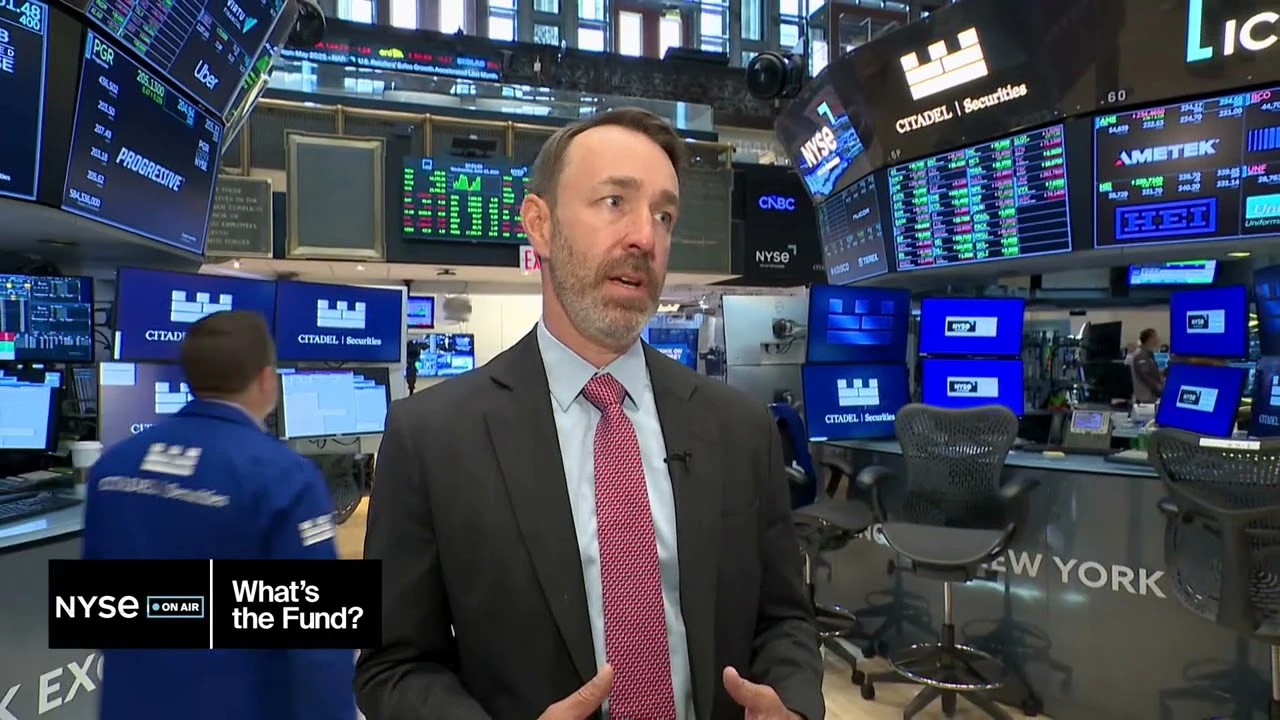
What's the Fund | Ocean Park Diversified Income ETF (DUKZ)
James St Aubin, Chief Investment Officer at Ocean Park Asset Management, discuss the DUKZ ETF, exposing investors to the whole spectrum of asset classes in the fixed income markets, through their rules-based process.

Browse all educational columns



Build and Analyze Your ETF Portfolio Like a Pro
Create your own ETF portfolio in minutes and instantly see allocations, exposures, performance, and risk. Visualize diversification across asset classes, regions, and sectors. Stress-test ideas, compare benchmarks, and refine your strategy with professional-grade analytics.