Create, analyze, optimize your ETF portfolio. Start now →



3 Reasons Traders Are Turning to Single Stock Leveraged & Inverse ETFs
From amplified exposure to tactical hedging and options and margin-free leverage, Single Stock Leveraged & Inverse ETFs are becoming a go-to tool for short-term traders.


Keep up with what matters in ETFs
Get timely ETF insights, market trends, and top ideas straight to your inbox.
Your newsletter subscriptions with us are subject to ETF Central's Privacy Policy and Terms and Conditions.
I don’t usually focus on individual company catalysts when evaluating ETFs. Even at the sector level, it is often more useful to step back and look at broader trends rather than zeroing in on one or two names.
That changes when you are dealing with single stocks. Over the past year, a handful of companies have consistently been in the spotlight, including PayPal (PYPL), Adobe (ADBE), UnitedHealth (UNH), and Texas Instruments (TXN), each driven by very specific, company-level developments.
For investors with existing long exposure looking to hedge, or for opportunistic traders aiming to capitalize on sharp directional moves following these developments, the traditional tools have been margin or options. However, ETF providers like Direxion have introduced an alternative in the form of Single Stock Leveraged ETFs.
As of March 25, Single Stock Leveraged ETFs are now available for each of the companies mentioned above. And the lineup does not stop there. Direxion in particular has a broad suite covering many high-profile stocks.
While the underlying names may differ, these products tend to share three common traits that make them appealing as short-term trading tools in place of options or margin.
Get data on 14,000+ ETFs
Access Trackinsight's reliable and comprehensive data with 500M+ points on 14,000+ ETFs.
Eligibility for After-Hours Trading
Options can be enticing for investors seeking amplified moves or hedging. They unlock more advanced, multi-leg strategies.
For example, you might use an iron condor if you expect a stock to stay within a defined range and want to collect premium from both sides, or a calendar spread if you are betting on changes in volatility over time rather than direction.
There is one key drawback, though. You generally cannot enter or exit options positions outside of regular market hours. That becomes a real limitation because many of the largest price moves in single stocks are tied to earnings releases, which often happen before the open or after the close.
In those situations, you are effectively stuck. You either have to position ahead of time and accept the gap risk, or wait until the next session when prices may have already moved significantly.
Single Stock Leveraged & Inverse ETFs help address this gap. Because they trade like regular equities, they are eligible for extended-hours trading on major exchanges.
For highly liquid underlying names, many of these ETFs maintain relatively tight spreads and sufficient volume even outside standard trading hours, allowing traders to express a view or adjust positioning around major events when traditional options markets are unavailable.
Defined Risk of Loss
If you are bearish, you might sell a stock short by borrowing shares, selling them, paying ongoing borrowing costs, and hoping to buy them back later at a lower price. If you are bullish, you might borrow capital to increase your position size and amplify returns.
The issue is that both approaches introduce the risk of a margin call. This happens when the value of your position moves against you to the point where your account equity falls below the broker’s required maintenance level.
If that threshold is breached, the broker can demand that you deposit additional funds or liquidate positions. If you fail to meet the call, positions may be forcibly closed at unfavorable prices. In fast-moving markets, that can create losses that exceed your initial expectations.
As a result, trading on margin adds another layer of complexity. You are not just managing your view on the asset. You are also managing leverage, borrowing costs, and the risk of forced liquidation, all of which need to be factored into position sizing.
Single Stock Inverse ETFs like Direxion’s simplify that equation. Your maximum loss is limited to the amount you invest in the ETF. You cannot lose more than your initial capital, even with leveraged versions of these products.
That is because the leverage is embedded within the fund structure, typically through swaps that reset daily exposure internally. This makes Single Stock Leveraged & Inverse ETFs a more straightforward tool for defining risk.
Instead of worrying about margin calls or maintaining collateral, you can size your position based on how much capital you are willing to put at risk upfront.
Avoiding the Options Greeks
Unlike margin trading, most options strategies generally do not carry the risk of a margin call, unless you are selling naked options. But they come with a different kind of complexity. It is not enough to simply be right on direction.
For example, an investor who takes a bullish position ahead of an earnings announcement using call options may see the stock move higher, yet still experience muted gains or even a loss. That is because options pricing is influenced by more than just the direction of the underlying asset.
The first factor is time decay, also known as theta. As an option approaches expiration, its time value steadily erodes. This decay tends to accelerate meaningfully in the final 30 days to expiry, and becomes especially pronounced in the last one to two weeks.
That creates a timing problem. Even if your directional view is correct, being early or holding too long can materially reduce your returns.
The second, and often more insidious factor, is implied volatility. Leading into events like earnings, implied volatility typically rises as traders anticipate a large move. Once the event passes, that uncertainty is resolved, and implied volatility collapses.
This is known as a volatility crush. If you bought options when implied volatility was elevated, the drop in volatility after the event can offset gains from the underlying price move.
This is why you can be correct on direction but still lose money. You were right about where the stock would go, but wrong about how volatility and time decay would interact with your position.
Single Stock Leveraged & Inverse ETFs remove those variables. They are purely directional instruments. These sharp tools aim to deliver a set multiple of the daily return of the underlying stock using swaps.
There is no need to factor in implied volatility or time decay. In short, Single Stock Leveraged & Inverse ETFs have no Greeks, which makes them a more straightforward tool for expressing a view on price movement alone.
Please note this article is for information purposes only and does not in any way constitute investment advice. It is essential that you seek advice from a registered financial professional prior to making any investment decision.
*Options: In finance, an option is a contract which conveys to its owner, the holder, the right, but not the obligation, to buy or sell a specific quantity of an underlying asset or instrument at a specified strike price on or before a specified date, depending on the style of the option.
An investor should carefully consider a Fund’s investment objective, risks, charges, and expenses before investing. A Fund’s prospectus and summary prospectus contain this and other information about the Direxion Shares. To obtain a Fund’s prospectus and summary prospectus call 866-476-7523 or visit our website at direxion.com. A Fund’s prospectus and summary prospectus should be read carefully before investing.
Investing in the funds involves a high degree of risk.
Unlike traditional ETFs, or even other leveraged and/or inverse ETFs, these leveraged and/or inverse single-stock ETFs track the price of a single stock rather than an index, eliminating the benefits of diversification. Leveraged and inverse ETFs pursue daily leveraged investment objectives, which means they are riskier than alternatives which do not use leverage. They seek daily goals and should not be expected to track the underlying stock’s performance over periods longer than one day. They are not suitable for all investors and should be utilized only by investors who understand leverage risk and who actively manage their investments. The Funds will lose money if the underlying stock’s performance is flat, and it is possible that the Bull Fund will lose money even if the underlying stock’s performance increases, and the Bear Fund will lose money even if the underlying stock’s performance decreases, over a period longer than a single day. Investing in the Funds is not equivalent to investing directly in the underlying security.
Direxion Shares Risks – An investment in a Fund involves risk, including the possible loss of principal. Each Fund is non-diversified and includes risks associated with a Fund concentrating its investments in a particular security, industry, sector, or geographic region which can result in increased volatility. A Fund’s investments in derivatives such as futures contracts and swaps may pose risks in addition to, and greater than, those associated with directly investing in securities or other investments, including imperfect correlations with underlying investments or the Fund’s other portfolio holdings, higher price volatility and lack of availability. As a result, the value of an investment in a Fund may change quickly and without warning.
Distributor: ALPS Distributors, Inc.
Mentioned ETFs
No specific ETFs were tagged
Further reading

Latest ETF News
See all ETF newsETF Comparison: State Street Energy Select Sector SPDR ETF (XLE) Versus Vanguard Energy ETF (VDE)

ETF Central's Guide to Defensive Sector Investing

These Industry ETFs Could Be Vulnerable to AI Disruption





 Advantages of ETFs over Mutual Funds1/6
Lower Costs
In this guide, we'll explore the advantages of ETFs over mutual funds, giving you valuable insights into why ETFs have gained significant popularity among investors like yourself.
Leveraged ETFs: Unlocking the Potential for Amplified Returns1/6
Understanding Leveraged ETFs
Explore leveraged ETFs: potential for amplified returns & risks. 5 ETFs to consider across equities, commodities & fixed income.
What is a Leveraged ETF?1/6
Introducing Leveraged and Inverse ETFs
In this guide, we'll dive into the world of leveraged ETFs, exploring their definition, mechanics, potential risks, and rewards.
Recent educational content

ETF Trends
ETF Industry KPIs March 30, 2026
The ETF Industry saw 33 New Launches, 1 Ticker Change and 9 closures last week.

Asset TV
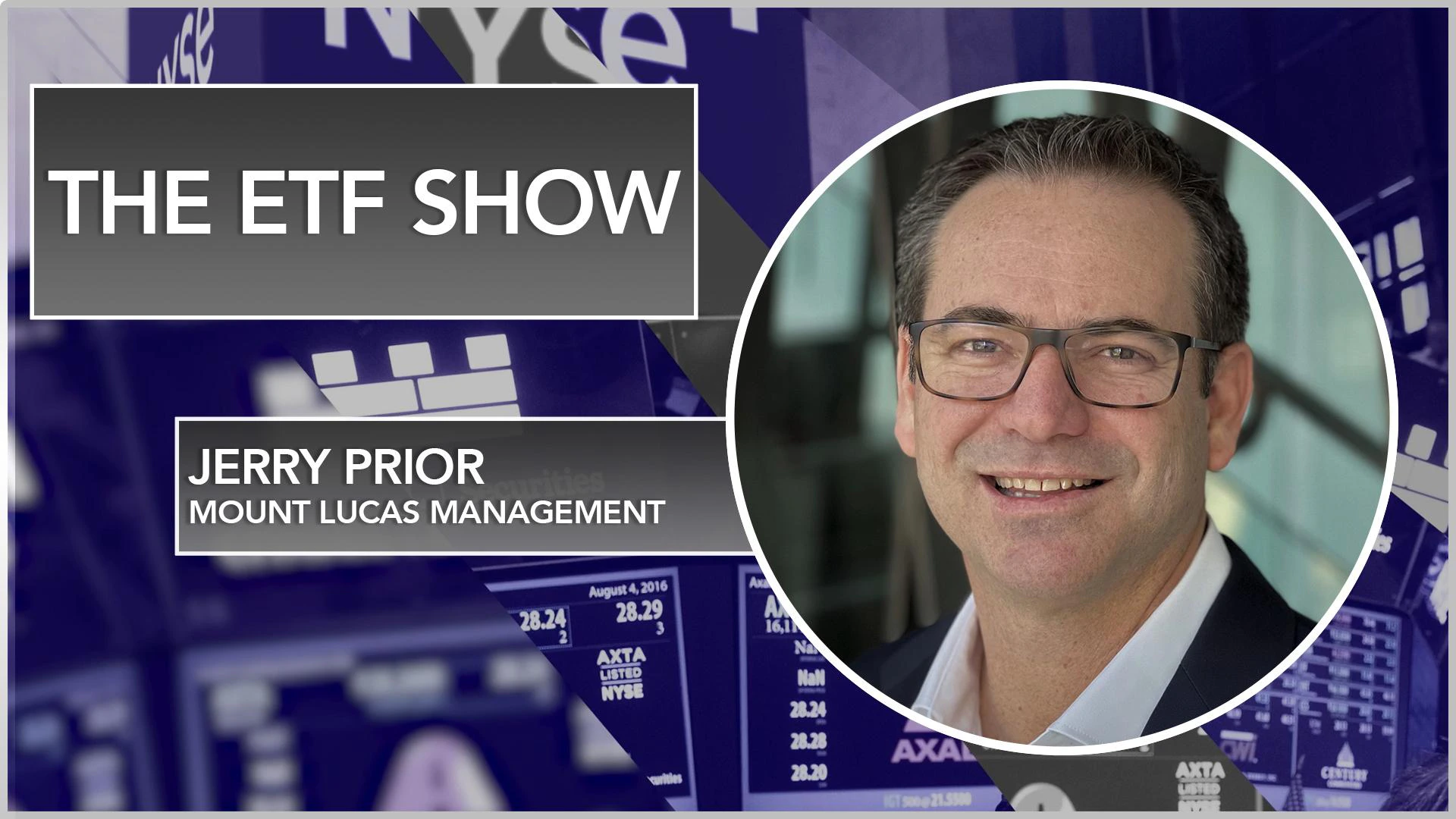
The ETF Show - Private Market ETFs Have Huge Demand, But Liquidity Concerns
Jerry Prior, COO and CIO of Managed Futures at Mount Lucas Management spoke with The ETF Show about the growing demand for private market access inside the ETF wrapper, and the concerns over illiquidity.

Asset TV
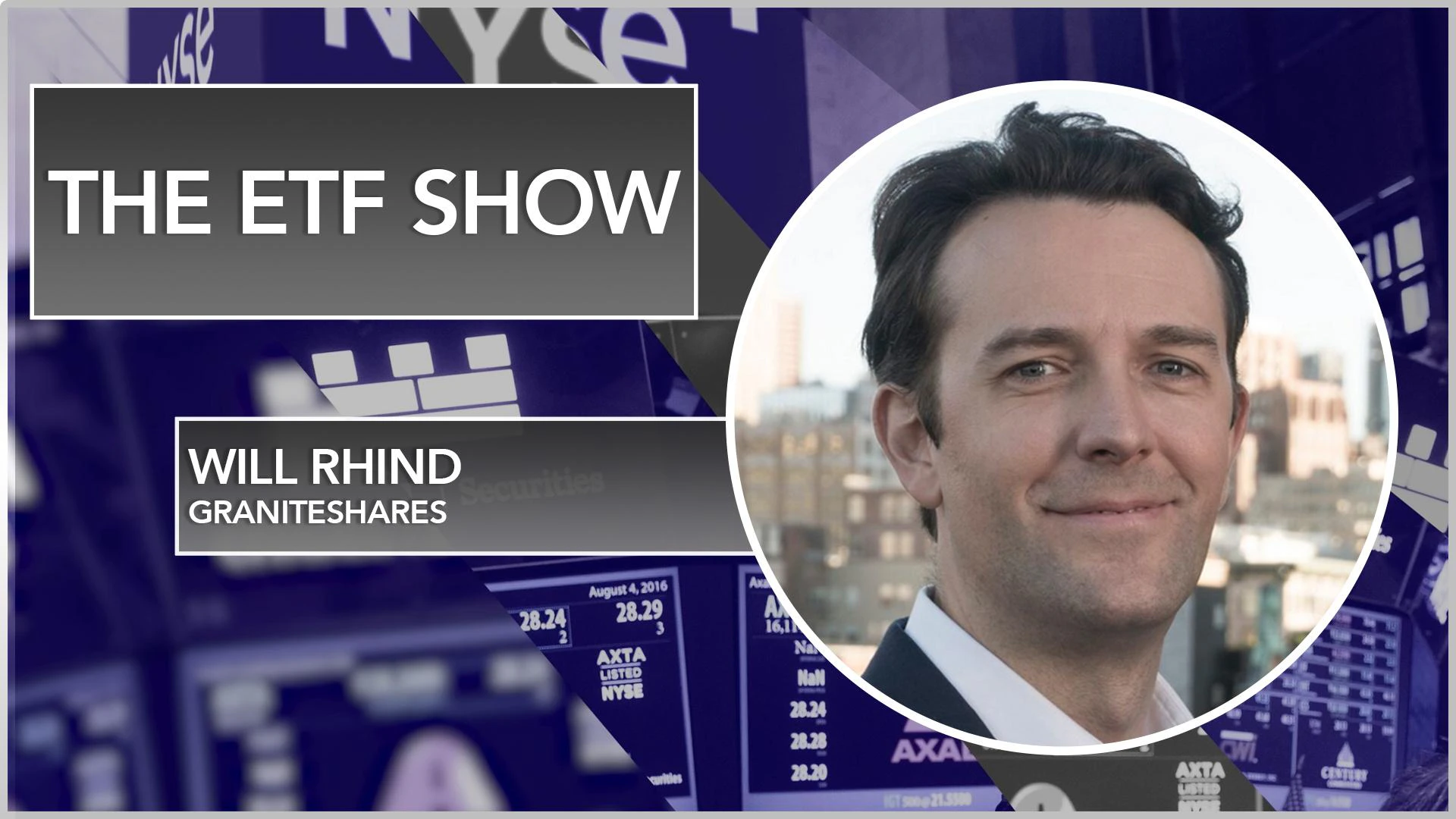
The ETF Show - Option Income ETF Strategies
Will Rhind, Founder & CEO of GraniteShares joins The ETF Show to discuss option income ETF strategies and their growing popularity amongst investors.
ETF Trends
ETF Industry KPIs March 23, 2026
The ETF industry saw 12 new launches, 3 conversions, 1 ETF share class addition, 1 ticker change, and 6 closures last week.
Browse all educational columns



Build and Analyze Your ETF Portfolio Like a Pro
Create your own ETF portfolio in minutes and instantly see allocations, exposures, performance, and risk. Visualize diversification across asset classes, regions, and sectors. Stress-test ideas, compare benchmarks, and refine your strategy with professional-grade analytics.