Keep tabs on your favorite ETFs with a personalized weekly tracker. Create a Watchlist now →



3 Low-Risk All-In-One ETFs for Conservative Investors
These ETFs are generally suitable for retirees with lower risk tolerance and shorter investment objectives.


Keep up with what matters in ETFs
Get timely ETF insights, market trends, and top ideas straight to your inbox.
Your newsletter subscriptions with us are subject to ETF Central's Privacy Policy and Terms and Conditions.
When it comes to ETF selection, investors should honestly assess their circumstances when it comes to three main factors. These three factors must be considered holistically:
- Time horizon: how long will it be before I need the money and have to sell the ETF?
- Investment objective: What am I investing for? Retirement? Income? Down payment?
- Risk tolerance: How much volatility or how big of a drawdown can I endure without panic-selling?
Today, I'll be profiling some ETFs that could be suitable for the conservative investor, who is usually investing post-retirement, needs steady income and safety of principal, and does not want to take on excessive volatility.
Each of these ETFs is intended to be an all-in-one, professionally managed solution for investors looking to keep their portfolio simple. They're examples of the recent trend in the ETF industry towards managed, one-ticker solutions.
Like what you're reading?
Stay in the loop — get the latest ETF insights: trends, analysis, and expert picks.
iShares Core Conservative Allocation ETF (AOK)
AOK is one of the ETFs in iShares' "Asset Allocation" suite. The asset allocation ETFs provide investors with an all-in-one portfolio of global stocks and bonds in various proportions, which range from 80/20, 60/40, and 30/70. They are rebalanced automatically on a periodic basis.
As its name suggests, AOK targets conservative investors. With an asset allocation of 30% equities and 70% fixed income, it tends to be suited for investors favoring safety of principle above all, with moderate income potential and modest capital appreciation potential.
In terms of holdings, AOK allocates to U.S., international developed, and international emerging stocks via underlying index ETFs. On the bond side, there is an allocation to U.S. and international bonds as well as a tiny bit of money market exposure. The ETF charges an expense ratio of 0.15%.
Invesco Conservative Multi-Asset Allocation ETF (PSMC)
Investors who don’t mind an actively managed ETF can opt for PSMC, which selects investments based on quantitative and qualitative criteria across multiple asset classes. Compared to AOK, PSMC is much more complex in terms of its underlying ETFs
On the equity side, PSMC utilizes smart-beta ETFs that target growth stocks and multi-factor approaches. The fixed-income side is actively managed as well, with ETFs that target high yield corporate bonds, emerging market sovereign debt, senior loans, municipal bonds, and variable-rate loans.
Unlike AOK, PSMC targets a more dynamic asset allocation, with a target of 65%-95% in fixed income ETFs, 5%-35% in equity ETFs and 3%-20% in ETFs that invest in foreign stocks and bonds. However, it charges a much higher expense ratio of 0.37% due to the active management.
LifeGoal Conservative Wealth Builder ETF (SAVN)
I'm always on the lookout for up-and-coming ETFs outside of the big fund managers, and SAVN is a great example. This ETF targets an allocation of 15% equities and 85% fixed income, making it more conservative compared to AOK or PSMC. It is also actively managed, with a wide array of holdings.
On the equity side, SAVN holds some individual stocks screened for dividend growth and low volatility, but also holds domestic and international equity ETFs targeting dividend growth, small-caps minimum volatility. It also holds a small allocation to utility and materials sector ETFs.
On the bond side, SAVN steps outside the usual aggregate bond ETFs, with holdings in mortgage-backed securities, intermediate treasury and corporate bonds, TIPS, long-term corporate bonds, and emerging market bonds. Uniquely, SAVN also allocates to gold and commodity ETFs.
Please note this article is for information purposes only and does not in any way constitute investment advice. It is essential that you seek advice from a registered financial professional prior to making any investment decision.

Latest ETF News
See all ETF newsCould Water ETFs Be the Next AI Bottleneck Trade?

What is a Boomer Candy ETF?

ETF Comparison: NEOS Nasdaq-100 High Income ETF (QQQI) Versus Goldman Sachs Nasdaq-100 Premium Income ETF (GPIQ)





 Advantages of ETFs over Mutual Funds1/6
Lower Costs
In this guide, we'll explore the advantages of ETFs over mutual funds, giving you valuable insights into why ETFs have gained significant popularity among investors like yourself.
Leveraged ETFs: Unlocking the Potential for Amplified Returns1/6
Understanding Leveraged ETFs
Explore leveraged ETFs: potential for amplified returns & risks. 5 ETFs to consider across equities, commodities & fixed income.
What is a Leveraged ETF?1/6
Introducing Leveraged and Inverse ETFs
In this guide, we'll dive into the world of leveraged ETFs, exploring their definition, mechanics, potential risks, and rewards.
Recent educational content

ETF Trends
ETF Industry KPIs September 8, 2026
This week’s KPI data overview highlights key metrics and trends shaping the ETF landscape.

ETF Trends
ETF Industry KPIs August 31, 2026
This week’s KPI data overview highlights key metrics and trends shaping the ETF landscape.
ETF Trends
ETF Industry KPIs August 24, 2026
This week’s KPI data overview highlights key metrics and trends shaping the ETF landscape.
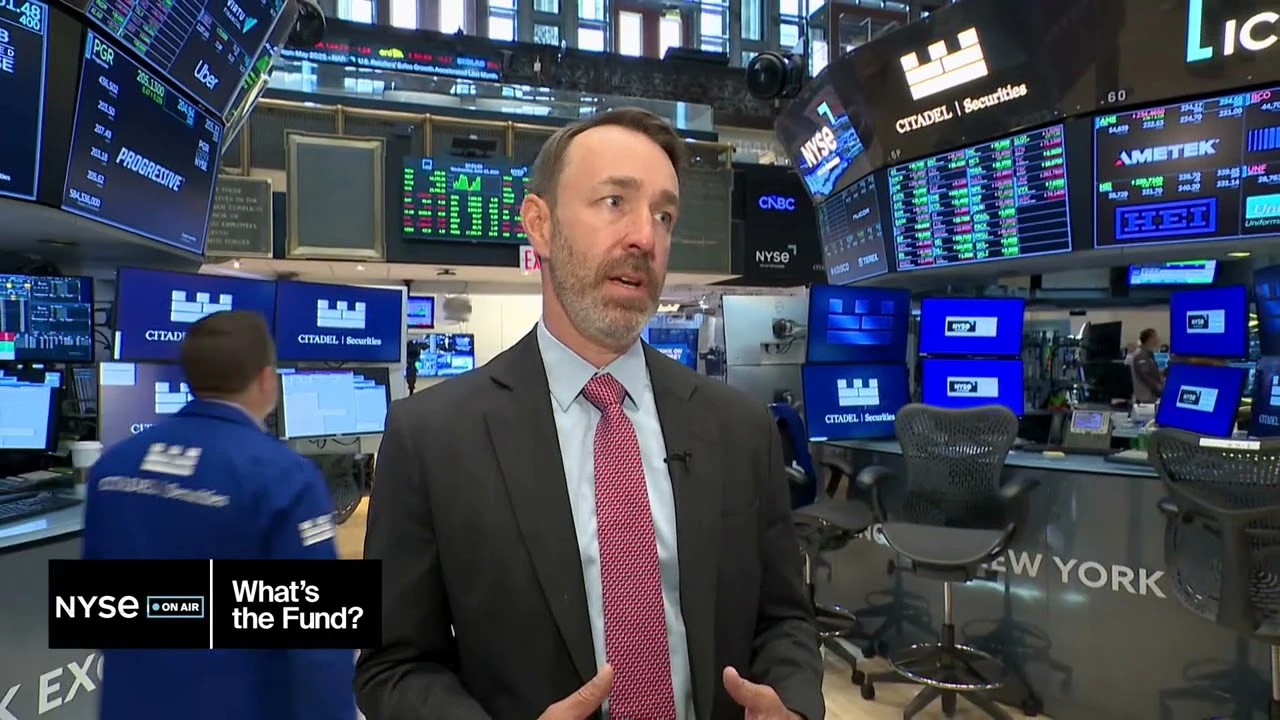
What’sTheFund
What's the Fund | Ocean Park Diversified Income ETF (DUKZ)
James St Aubin, Chief Investment Officer at Ocean Park Asset Management, discuss the DUKZ ETF, exposing investors to the whole spectrum of asset classes in the fixed income markets, through their rules-based process.

Browse all educational columns



Expert-Built ETF Portfolios, All in One Place
Don’t start from scratch. Discover ready-made ETF portfolios built by professionals to match different goals, timelines, and market views. Use them as inspiration or as a starting point for your own allocation.